Articles
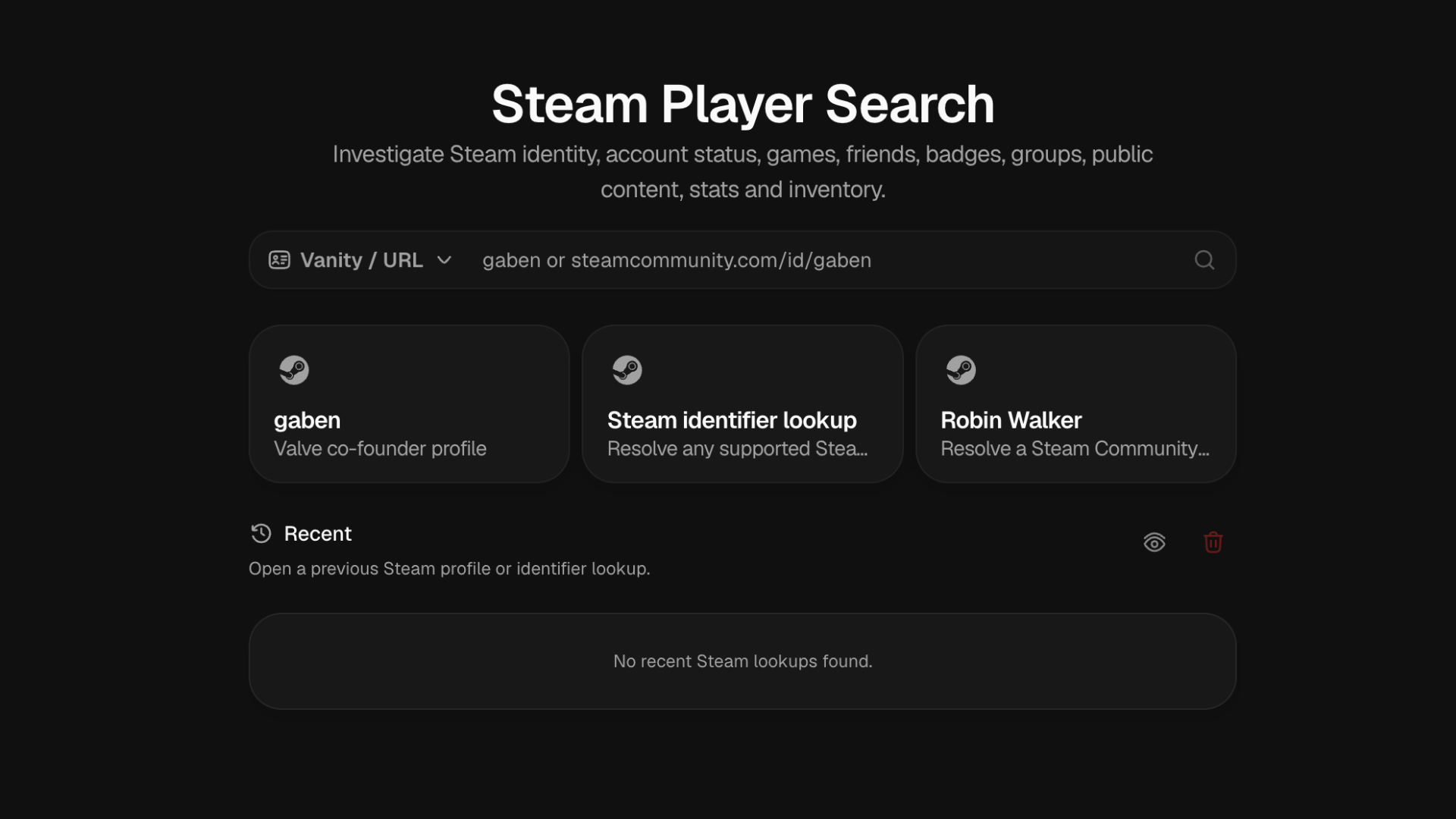
Steam OSINT: Profiles, Friends, Games, Bans and Inventory
Investigate public Steam profiles, games, friends, bans, groups, badges, stats, content, and inventory through a hosted tool and API.
By OsintlyRead
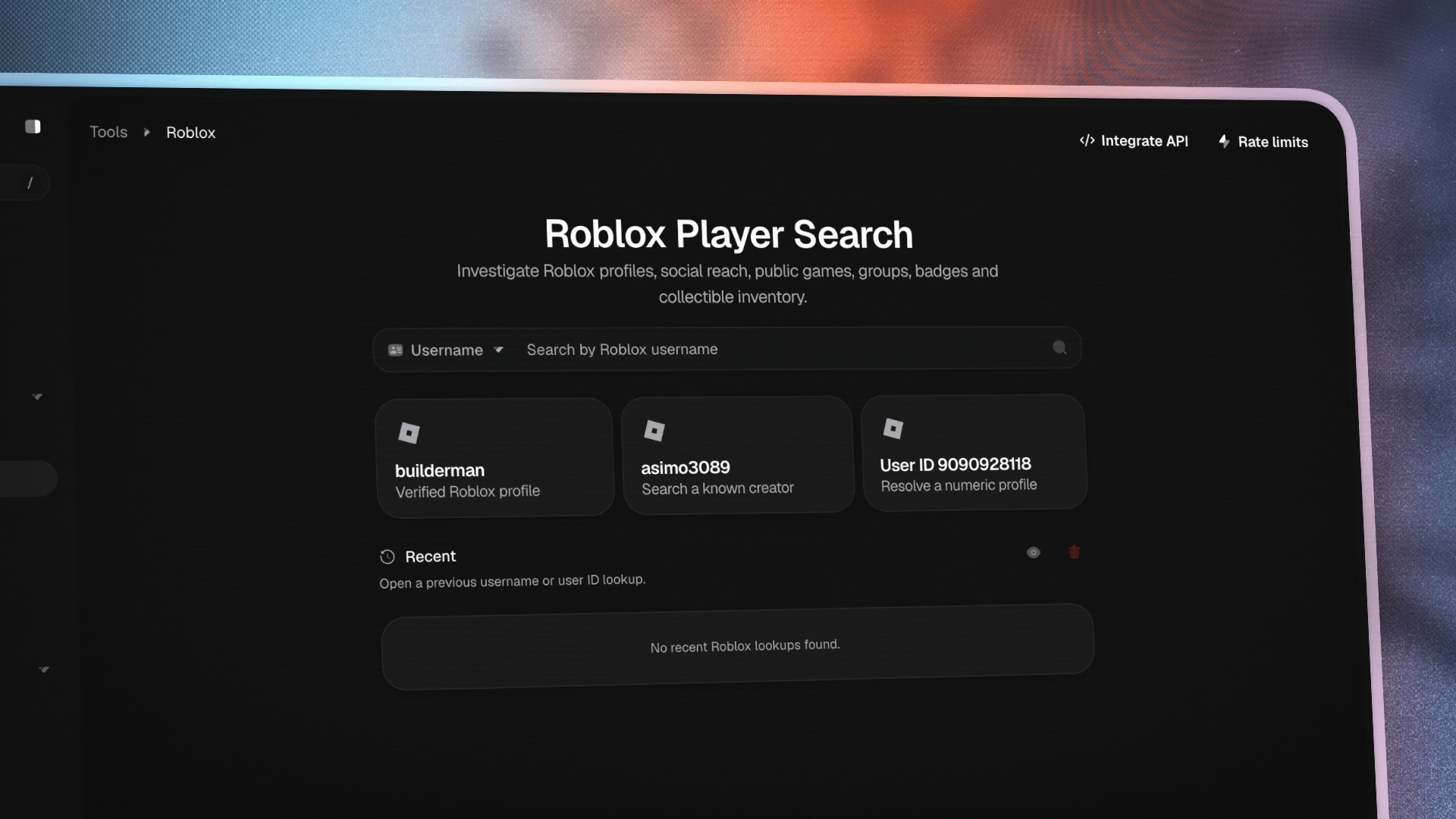
A Roblox username can lead to a stable user ID, public profile information, social data, friends, groups, games, badges, and collectibles. These surfaces can help verify an account and map public gaming activity when they are handled with care.
Osintly provides a hosted Roblox lookup and a documented Roblox API for developers. The integration uses public provider APIs and does not require you to supply a Roblox provider secret.
Use this workflow only for legitimate, authorized research. Roblox has a large youth audience, so data minimization and careful handling are especially important.
The Roblox tool accepts a username or numeric user ID.
Usernames are easy to search. User IDs are stable and better for internal storage. Resolve the username early, then attach later observations to the user ID.
type RobloxIdentity = {
  query: string;
  resolvedUserId?: string;
  observedUsername?: string;
  collectedAt: string;
};
Do not overwrite earlier usernames. Keeping timestamped observations can help explain a later change.
Start with an account you control or are authorized to investigate:
1. Open the Roblox OSINT tool.
2. Enter a username or user ID.
3. Inspect which public sections are available.
4. Note the stable ID and source links.
5. Decide which API routes your application needs.
This manual step prevents you from designing a schema around fields that are private or rarely available.
The profile route costs one credit and returns public identity and account information when available.
Useful fields may include the current username, display name, description, creation information, and public status. Treat display names and descriptions as user-provided claims. They can be copied, changed, or intentionally misleading.
Social and friends are separate one-credit routes. Public relationship data can support network analysis, but the meaning of an edge is uncertain.
A connection might represent:
Store the relationship neutrally and avoid inferring personal closeness without independent evidence.
The groups route costs one credit and returns public memberships and associated metadata.
Groups may indicate a game community, development team, interest, language, or role. A membership is not necessarily an endorsement of every group activity. Preserve rank or role information when available, but label it as provider data rather than your own conclusion.
The games route costs one credit. Public game creation or participation context can help distinguish similar usernames and surface creator activity.
Popular games are weak identity signals. More distinctive combinations of created experiences, groups, badges, and repeated usernames can be more useful when corroborated.
The badges route costs one credit and can show public achievements or event participation.
Badges may contain dates and game context. Use them as timeline observations, not proof that the same person continuously controlled the account.
The collectibles route costs one credit and returns public collectible information when available.
Collectibles can be valuable or personally sensitive. Avoid turning asset ownership into financial profiling unless it is necessary and lawful. Do not assume that a displayed item is still controlled by the same person or that its market value is realized value.
The all route costs two credits and can collect the main public sections in one request.
curl --request POST \
  --url https://api.osint.ly/tools/roblox/all \
  --header "Authorization: Bearer $OSINTLY_API_KEY" \
  --header "Content-Type: application/json" \
  --data '{ "value": "ExampleUsername", "type": "username" }'
Check the current request schema in the Roblox API documentation before deploying.
The all route is useful for a broad analyst view. A focused product may save data and reduce payloads by calling only profile, groups, or another required route.
The current V1 integration uses public Roblox APIs. Your application authenticates only to Osintly with its bearer token.
Keep the Osintly token on your backend. Do not expose it in browser JavaScript, game scripts, public repositories, or mobile bundles. Follow the Osintly authentication guide.
Roblox accounts may have private sections, incomplete public data, or provider-side errors. Your interface should distinguish:
Do not retry invalid input. Use bounded retries for temporary failures and preserve successful sections if another collector fails.
A lawful OSINT product should collect the minimum data required for its purpose. That principle is particularly important for platforms used by children and teenagers.
Consider these controls:
Osintly's Ethics Policy and Is Osintly Safe? provide additional context for responsible use and retention.
A public Roblox username may resemble an identity on another gaming service. Validate each candidate separately with the hosted Epic Games, Xbox, Steam, PlayStation, or Social Club tools.
Do not link accounts based only on the same display name. Look for multiple consistent public signals and preserve every platform's stable ID.
Test the hosted Roblox lookup, read the Roblox API reference, review shared authentication and saved-result behavior in the Tools API introduction, and compare current API plans.
A good Roblox OSINT workflow starts with a stable user ID, collects only the public sections needed, and keeps uncertainty visible from the first lookup to the final analyst review.
Articles
Investigate public Steam profiles, games, friends, bans, groups, badges, stats, content, and inventory through a hosted tool and API.
Articles
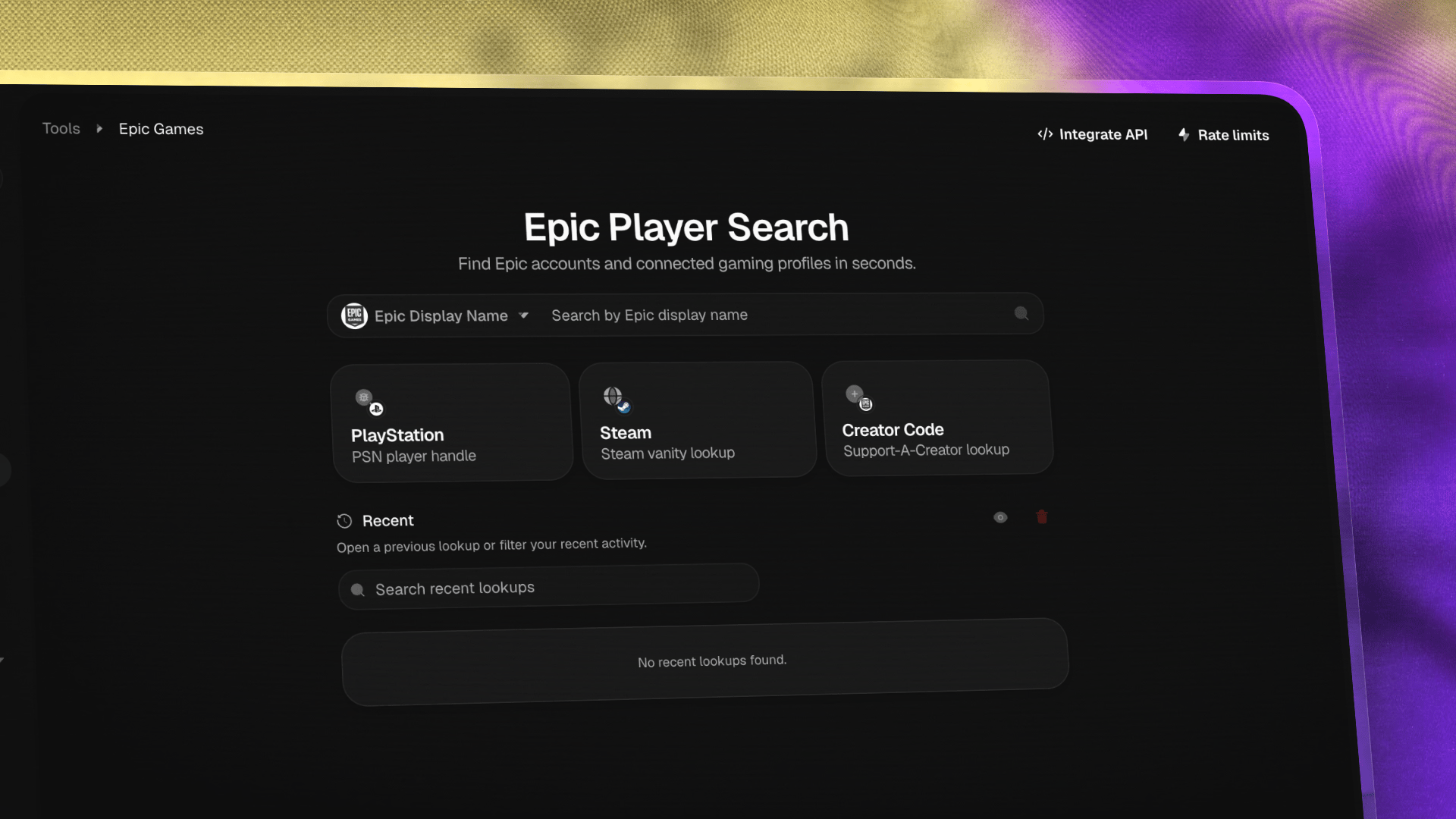
Search Epic Games identities, resolve account IDs, and investigate linked gaming accounts with a hosted tool and developer API.
Articles
Share investigations, results, credits, and alerts with your team. See how Osintly organizations handle access, SSO, exports, billing, and research capacity.
Articles
osint.rocks says it is taking a break. Try Osintly's free username and email search previews, plus a free Google OSINT alternative to GHunt.
1,550+ ready-to-use OSINT modules covering people, companies, domains, emails, and more.
Everything you need to integrate Osintly into your workflow, from quick start to advanced APIs.
Connect with thousands of OSINT investigators. Share techniques, ask questions, collaborate.
Tutorials, case studies, and insights from our team of open source intelligence specialists.
1,550+ OSINT modules. AI analyst built-in. Real-time data. Everything you need in one place.